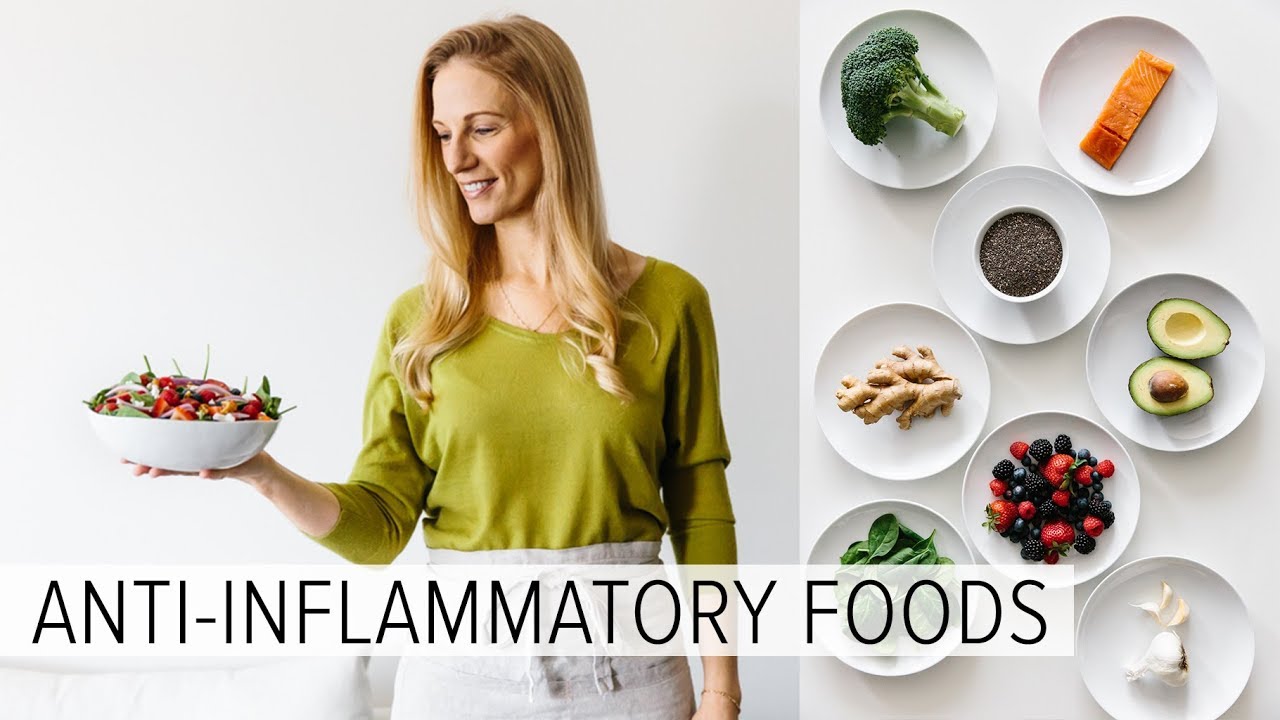
ANTI-INFLAMMATORY FOODS
You’ve probably noticed by now that most of food recipes are veggie-heavy and prioritize fresh, wholesome ingredients. That’s because after four autoimmune diagnoses, I’ve learned how to truly nourish my body with simple, anti-inflammatory foods. So, what exactly are anti-inflammatory foods? They’re simply foods that have been well-studied to reduce inflammation in the body. Nutritionists and doctors agree that we need more of these foods because not only do they reduce inflammation, but they also offer a plethora of other health benefits. I’ll share eight anti-inflammatory foods that I eat every week and provide a few different recipe ideas.
Berries, whether they’re blueberries, strawberries, raspberries, or blackberries, all contain antioxidants known as anthocyanins. It’s the anthocyanins that give berries their vibrant blue, purple, and reddish color. While all fruits are generally high in antioxidants, berries are the superstars because they contain numerous chemical compounds that are excellent at fighting inflammation, cancer, and cardiovascular disease. Here’s the cool part: not only do berries reduce existing inflammation, but they also help train our cells to respond better to future inflammation episodes, making regular consumption a smart idea. A few of my favorite recipes with berries include my blueberry smoothie, berry spinach salad, raspberry vinaigrette, strawberry banana smoothie, and acai bowl.

I’m sure you know that leafy greens are good for you, but do you know why? Spinach, kale, Swiss chard, dandelion greens, and other greens are not only full of antioxidants, but they’re also alkalizing to the body. They’re packed with nutrients, including folate, fiber, vitamins A, C, E, and K, and a variety of minerals. While some jokingly refer to leafy greens as rabbit food, including my dad, there’s a reason why all animals in the animal kingdom prioritize leafy greens: they nourish our bodies on a cellular level. Leafy greens prevent cognitive decline, keep our microbiome in tip-top shape, and reduce overall body inflammation. Some of my favorite recipes with leafy greens include my wild rice and arugula salad, shrimp, asparagus, and avocado salad, garlic sautéed Swiss chard, post-workout green smoothie, and kale chips.
Salmon and other fatty fish such as trout, sardines, anchovies, and mackerel are all high in essential omega-3 fatty acids. These are essential because your body can’t make them; you have to get them from your diet. If you have an autoimmune condition, omega-3s are even more important because studies have proven them very beneficial for a wide range of autoimmune conditions, including lupus, rheumatoid arthritis, type 1 diabetes, psoriasis, ulcerative colitis, multiple sclerosis, and many others. Omega-3s are also critical for brain health, and interestingly enough, those who consume fatty fish regularly are less likely to be depressed or anxious. In short, omega-3s are one of the most well-studied nutrients, and studies repeatedly show the massive anti-inflammatory effects they have on the body. Some of my favorite salmon recipes include my Dijon baked salmon, orange glazed salmon, salmon patties, smoked salmon frittata, and salmon avocado salad.
When most people think of avocados, they think of healthy fats, and that’s good because avocados are full of monounsaturated fat, which is the good fat that helps reduce cholesterol and inflammation of the joints. Healthy fats like those from avocados are needed for energy, blood clotting, brain development, absorbing fat-soluble vitamins, and limiting inflammation. The various nutrients in avocados have also proven beneficial in preventing neurodegenerative diseases such as Alzheimer’s and Parkinson’s. I’m always investigating Parkinson’s research because my dad has Parkinson’s. A fun fact about avocados is that they actually have more potassium than bananas. For a three-and-a-half-ounce serving of bananas, you would get 10% of the recommended daily allowance of potassium, and in the same serving size of an avocado, you would get 14%. Some of my favorite avocado recipes include my tuna stuffed avocados, avocado egg salad, avocado dressing, carrot and zucchini pasta with avocado cucumber sauce, and baked eggs in avocado.
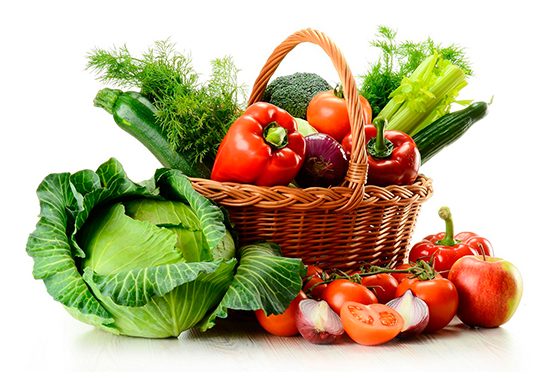
Broccoli and other cruciferous vegetables such as cauliflower, bok choy, and Brussels sprouts are jam-packed with antioxidants, vitamins, and phytochemicals. Broccoli is rich in vitamin K, vitamin C, potassium, magnesium, and fiber, but it’s the sulforaphane that makes broccoli extra special. Sulforaphane is one of the most studied compounds in broccoli, and studies show that it has protective effects against cancer and can detoxify harmful chemicals in the environment that would otherwise trigger inflammation in our body. Some of my favorite broccoli and cruciferous veggie recipes include my broccoli salad, steamed broccoli, whole 30 chicken broccoli casserole, garlic ginger bok choy, and cauliflower rice tabbouleh.
Garlic has been used for centuries for its medicinal properties, and numerous studies repeatedly show that it has both cancer-preventive and immune-boosting effects. Of course, garlic adds enormous flavor to any recipe, but it’s in its wide-ranging health benefits where garlic truly shines. Garlic contains anti-inflammatory chemicals such as quercetin, which naturally inhibits histamine, and sulfur compounds that stimulate your immune system to fight disease. If you have arthritis, garlic may be your best friend as well because garlic has proven to reduce the inflammation, pain, and cartilage damage associated with arthritis. Now, it’s hard to pick just a handful of garlic recipes because I use garlic in so many different recipes on my website, but I love my zucchini pasta with lemon garlic shrimp, mashed cauliflower with garlic and herbs, garlic sautéed Swiss chard, sweet potato fries with garlic aioli, and poached chicken and winter vegetable soup.
Ginger, just like garlic, has been used for centuries around the world for its healing properties. It’s well known to help reduce motion sickness, pain, and nausea. Ginger contains substances known as gingerols that reduce inflammation and turn off the pain-causing compounds in the body. In terms of digestion, ginger supports digestion and helps with motility, which means it moves things more quickly through our intestines. In fact, it’s been shown that ginger can move things through twice as fast, which is key if you struggle with constipation. Because of these digestive benefits, ginger has been proven to help reduce colorectal cancer and boost the immune system. Remember that about 75 to 80% of our immune system comes from our gut, so anything that helps the gut, like ginger, is obviously going to help our immune system as well. Some of my favorite ginger recipes include my scallops with citrus ginger sauce, carrot ginger soup, golden milk, cucumber melon gazpacho with ginger shrimp, and Asian cauliflower rice with ginger shrimp.
Lastly, we have chia seeds. While chia seeds are known as a superfood today, in ancient times, they were a dietary staple most known for providing energy. In the ancient Mayan language, the word “chia” actually translated to the word “strength.” In addition to all of the vitamins and nutrients in chia seeds, they also pack a hefty dose of fiber. In fact, they’re one of the world’s best sources of fiber, and all that fiber is great for helping to balance blood sugar and, of course, good gut health. Chia seeds, along with flax seeds, are loaded with antioxidants and omega-3s. The antioxidants fight free radicals, and the omega-3s reduce inflammation, just as I mentioned with the salmon. Some of my favorite chia seed recipes include my chia seed pudding, chia seed jam, ultimate seed crackers, peanut butter and jelly chia pudding, and coconut chia mango popsicles.

